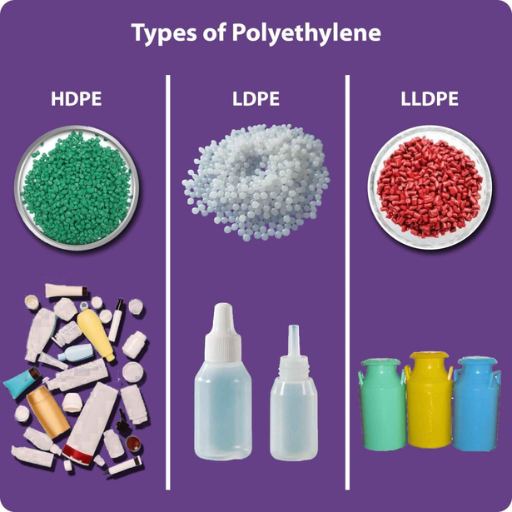

The black or coloured water tank on almost every Indian rooftop is one of the most familiar plastic products in the country. Most of these tanks are made by rotational moulding, and most of them use LLDPE as the main raw material.
For tank manufacturers, raw material is the biggest cost. It is also the biggest factor in whether a tank lasts ten years on a hot roof or starts cracking after two summers. This guide is for manufacturers who want to get that decision right.
---Why LLDPE Is the Standard for Rotomoulding
Rotational moulding works differently from injection or blow moulding. Powdered plastic is placed inside a mould, which is heated and rotated slowly on two axes. The powder melts and coats the inside of the mould, then the mould is cooled and the tank is removed.
LLDPE suits this process well because it:
- Flows evenly over the mould surface without pressure
- Gives good impact strength, which matters for a large hollow product
- Has good resistance to stress cracking
- Can be easily ground into fine powder
- Accepts UV stabilisers and colour masterbatch well
What to Look for in a Rotomoulding Grade
| Property | Why It Matters for Tanks |
|---|---|
| MFI (Melt Flow Index) | Rotomoulding grades usually sit in a medium range. Too low and the powder won't flow evenly; too high and impact strength drops. |
| Density | Affects stiffness. A slightly higher density gives a stiffer tank wall that bulges less when full. |
| UV stabilisation | Essential for rooftop tanks that face direct sunlight all year. |
| Powder quality | Particle size and flow of the ground powder affect wall thickness uniformity. |
| Lot consistency | Changing behaviour between lots forces you to keep adjusting oven time. |
Always check the producer's technical data sheet and confirm the grade is meant for rotomoulding. If you are new to reading data sheets, our guide on how to read a polymer TDS will help.

Understanding Layered Tanks
Many tanks in the Indian market are sold as "three-layer" or "four-layer" tanks. Each layer has a job:
- Outer layer: UV-stabilised and coloured for weather protection and appearance
- Middle layer: often black to block light and stop algae growth inside the tank
- Inner layer: food-grade, usually white, in contact with stored water
- Extra layer (in some designs): for added insulation or strength
The inner layer should always be made from suitable virgin material, because it is in direct contact with drinking water. Cutting cost on this layer is a risk to both product safety and brand reputation.
---Relevant Indian Standard
Rotationally moulded polyethylene water storage tanks in India are covered by IS 12701. If you sell to government projects or large distributors, they may ask whether your tanks meet this standard. Choosing a suitable rotomoulding grade from a reputed producer makes compliance far easier.
---Common Problems and Their Raw Material Causes
| Problem in Tank | Possible Raw Material Cause |
|---|---|
| Uneven wall thickness | Poor powder flow or wrong MFI |
| Cracks after a few months outdoors | Weak UV stabilisation |
| Bubbles or pinholes in wall | Moisture or contamination in material |
| Tank bulging when filled | Low density / low stiffness grade |
| Colour variation between batches | Masterbatch or base polymer inconsistency |
Market Note for Tank Makers
LLDPE prices have been volatile through 2026 because of supply disruptions from the Middle East. Domestic producers raised LLDPE prices again at the start of October. If you supply tanks under annual dealer rate contracts, keep this in mind when you renew pricing. Our October 2026 polymer price update has more detail.
---How We Help Rotomoulders
At Granil PolyTrade, we work with tank and container manufacturers who need LLDPE in regular quantities. We help them compare available grades, plan around seasonal demand (tank sales rise sharply before summer) and keep an alternate grade approved so production doesn't stop if one grade becomes tight.
If you are planning your next season's production, connect with our team to discuss LLDPE availability.
---Frequently Asked Questions
Which polymer is used to make plastic water tanks?
Most rotomoulded water tanks in India are made from LLDPE rotomoulding grade, often in multiple layers with UV stabilisers and colour.
Why is the inside of a water tank white?
The inner layer is usually made from white food-grade material for hygiene and so users can see the water clearly. A black middle layer blocks light to prevent algae.
Can reprocessed LLDPE be used for water tanks?
Reprocessed material should not be used for the inner layer that touches drinking water. Some manufacturers use it in non-contact layers, but this needs careful quality control.
Conclusion
A good water tank starts with the right LLDPE grade. Focus on the correct rotomoulding grade, strong UV protection, a safe inner layer and consistent supply, and you will build tanks that customers trust for years.
For polymer sourcing support and industrial raw material requirements across India, visit: