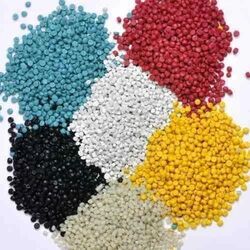
ABS (acrylonitrile butadiene styrene) is one of the most widely used engineering plastics in India. It is found in appliance housings, automotive interiors, electrical enclosures, helmets, luggage and toys. This guide covers the main ABS grades, where each is used, and what to check before you buy ABS granules.
What Makes ABS Useful?
ABS combines three monomers, each adding something different:
- Acrylonitrile – chemical resistance and heat stability
- Butadiene – toughness and impact strength
- Styrene – rigidity, gloss and easy processing
The result is a material with good impact strength, a glossy surface, good dimensional stability and easy moulding, at a moderate price. Density is about 1.03–1.07 g/cm³.
Main ABS Grades
| Grade | Typical applications |
|---|---|
| General purpose (injection) | Appliance housings, consumer products, toys |
| High impact | Helmets, luggage, protective covers |
| High heat | Automotive interiors, parts near motors or lamps |
| High flow | Thin-wall and large-area parts |
| Electroplating | Chrome-plated taps, trims, decorative fittings |
| Flame retardant (FR) | Electrical enclosures, chargers, switchgear (check UL 94 rating) |
| Extrusion | Sheets, profiles, refrigerator liners |
ABS vs Other Materials
- ABS vs PP: ABS is stiffer, has better surface finish and paints/plates well; PP is cheaper, lighter and more chemically resistant.
- ABS vs HIPS: ABS has better heat and chemical resistance and surface gloss; HIPS is cheaper for simple parts.
- ABS vs PC/ABS: PC/ABS blends add heat resistance and toughness for demanding parts at higher cost.
- ABS vs SAN: SAN is transparent and rigid but brittle; ABS is opaque and tough.
Processing Tips
ABS is mildly hygroscopic. Dry granules at about 80–85°C for 2–4 hours before moulding, especially for electroplating and high-gloss parts – moisture causes splay marks and poor plating adhesion. Avoid long residence time at high melt temperatures, which can yellow the material.
Prime, Off-Grade and Reprocessed ABS
Prime ABS gives consistent colour, flow and mechanical properties and is required for plating, FR and most branded products. Off-grade and reprocessed ABS can work well for non-critical parts, but colour and impact strength vary lot to lot. Always ask which category the material falls into before comparing prices.
Buying Checklist
- State the application and process (injection, extrusion, plating).
- Ask for the TDS: MFI (usually 220°C / 10 kg), notched Izod impact, HDT or Vicat.
- For electrical parts, confirm the flame rating (e.g. UL 94 V-0 or HB) and certificate.
- Specify natural or a colour, and whether you need colour matching.
- Confirm packing, lot size, lead time and payment terms.
See current options on our ABS granules page.
Get a Quote
Share the grade (or your current grade name), monthly quantity, delivery city and payment terms, and the Granil PolyTrade team will come back with today's rate and availability. Request a quote or register as a buyer.