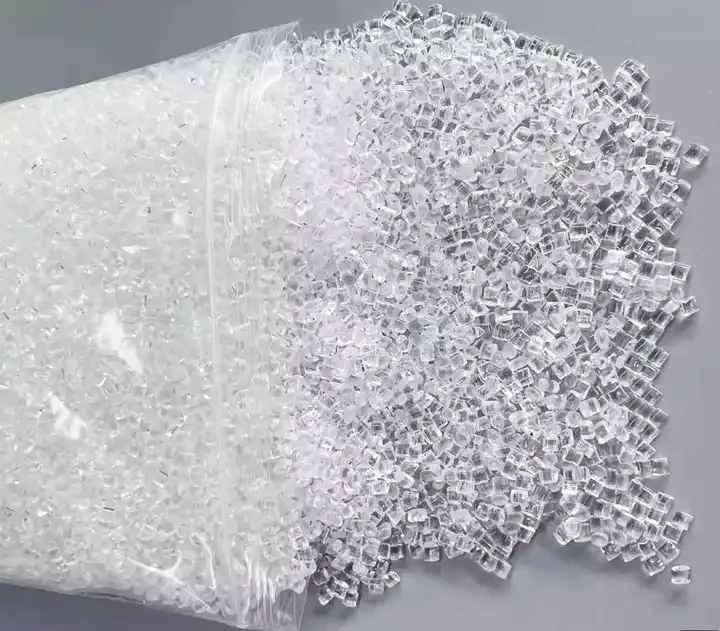
PMMA (polymethyl methacrylate), commonly called acrylic, is the material of choice when a part must be crystal clear, scratch resistant and stable outdoors. Tail-lamp lenses, signage, lighting diffusers, display stands and appliance panels are all typical PMMA applications. This guide explains the main PMMA grades, the properties that matter, and what to check before you buy PMMA granules in India.
What Is PMMA?
PMMA is an amorphous thermoplastic made by polymerising methyl methacrylate (MMA). Because it is amorphous, it has excellent optical clarity – light transmission of around 92%, which is higher than most glass. It is also lighter than glass (density about 1.18 g/cm³) and far more resistant to breakage, although it is more brittle than polycarbonate.
Key Properties of PMMA
- Optical clarity: about 92% light transmission, with very low haze in optical grades.
- Weather and UV resistance: PMMA does not yellow easily outdoors, which is why it is used for signs and automotive lenses.
- Surface hardness: better scratch resistance than most transparent plastics.
- Heat resistance: Vicat softening point is typically around 100–110°C depending on grade.
- Limitations: lower impact strength than PC or ABS, and sensitivity to some solvents (stress cracking).
Common PMMA Grades
| Grade type | Typical use | What to check |
|---|---|---|
| General-purpose injection | Appliance panels, caps, cosmetic packaging | MFI, clarity, colour |
| High-flow injection | Thin-wall or complex moulded parts | Higher MFI, cycle time |
| Heat-resistant | Automotive lamp lenses, lighting near heat sources | Vicat / HDT value |
| Extrusion | Sheets, rods, profiles | Low MFI, melt strength |
| Impact-modified | Parts that need more toughness | Notched impact, clarity trade-off |
| Light-diffusion | LED panels and diffusers | Transmission vs. hiding power |
Melt flow index (MFI) for PMMA is normally measured at 230°C / 3.8 kg. Always compare MFI values measured under the same test condition.
Where PMMA Is Used
- Automotive: tail-lamp and indicator lenses, instrument cluster covers, decorative trims.
- Lighting: LED diffusers, light guides and lamp covers.
- Signage and display: point-of-sale displays, sign boards, nameplates.
- Appliances and consumer goods: refrigerator and washing-machine panels, cosmetic jars and caps.
- Construction: skylights and glazing (usually as cast or extruded sheet).
Processing Tips
PMMA absorbs some moisture, so granules should be dried before moulding – typically 70–90°C for 2–4 hours in a dehumidifying dryer. Moisture causes silver streaks and bubbles, which are very visible in transparent parts. Keep barrel and mould clean when switching from coloured or opaque materials.
PMMA vs Polycarbonate: Quick Comparison
Both are transparent, but they solve different problems. PMMA gives better clarity, scratch resistance and outdoor stability at a lower price. Polycarbonate is much tougher and handles higher temperatures, but scratches more easily and needs UV protection outdoors. If the part must survive impact, choose PC; if it must look clear for years, choose PMMA.
Checklist Before Buying PMMA Granules
- Confirm the application and processing method (injection or extrusion).
- Ask for the technical data sheet (TDS) and check MFI, Vicat and light transmission.
- Check whether the material is prime, off-grade or reprocessed – clarity differs a lot.
- Confirm packing (usually 25 kg bags), lot consistency and lead time.
- A large share of PMMA used in India is imported, so ask about stock availability, not just price.
You can see our current PMMA offering on the PMMA product page, or use the Know Your Polymer tool if you are still choosing between materials.
Get a Quote
Share the grade (or your current grade name), monthly quantity, delivery city and payment terms, and the Granil PolyTrade team will come back with today's rate and availability. Request a quote or register as a buyer.