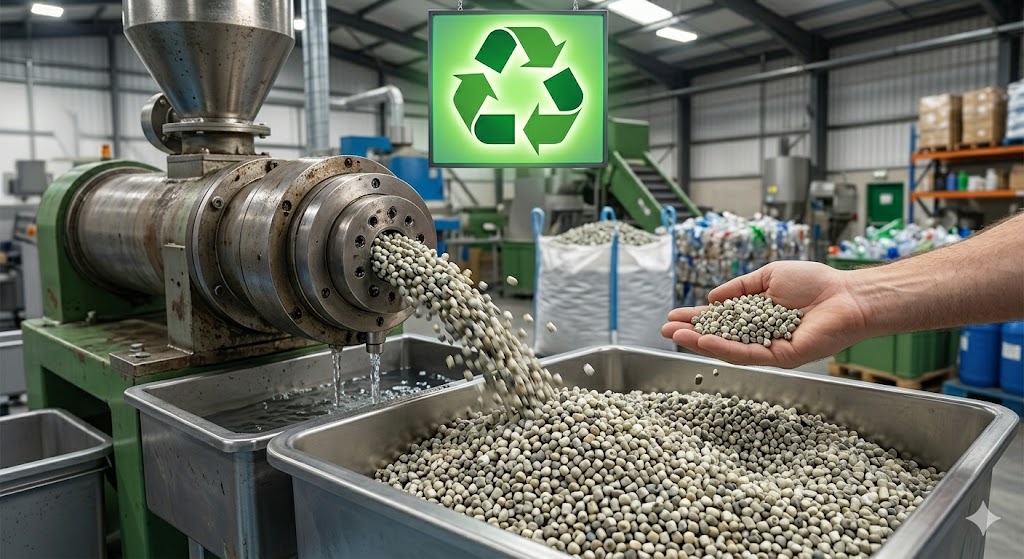
How Reprocessed Polymer Granules are Made from Scrap Plastic
Reprocessed polymer granules are manufactured by recycling used plastic waste and converting it into reusable plastic raw materials. These granules are widely used in packaging, construction, household products, industrial molding, agriculture, utility products, and recycling industries across India.
With increasing focus on sustainability and plastic waste management, the recycling industry has become one of the fastest-growing sectors in the polymer market.
Companies like Granil PolyTrade support industries across India by supplying polymer raw materials including reprocessed polymer granules for industrial and commercial applications.
What are Reprocessed Polymer Granules?
Reprocessed polymer granules are recycled plastic raw materials manufactured from used plastic products, industrial scrap, rejected molded components, packaging waste, films, containers, bottles, pipes, and other recyclable plastic materials.
Instead of sending plastic waste to landfills, recycling companies convert these materials into reusable polymer granules through specialized recycling machinery and processing systems.
Types of Plastic Scrap Used for Reprocessing
Different types of plastic waste are used for manufacturing recycled polymer granules.
| Plastic Material | Common Scrap Sources |
|---|---|
| PP (Polypropylene) | Woven bags, molded products, containers |
| HDPE | Pipes, drums, bottles, containers |
| LDPE | Plastic films, carry bags, flexible sheets |
| LLDPE | Stretch films, liners, packaging films |
| PET | Water bottles, beverage bottles |
| PVC | Pipes, cable insulation, fittings |
| ABS | Electronics scrap, appliance parts |
Complete Process of Manufacturing Reprocessed Polymer Granules
The recycling and reprocessing process includes multiple stages to convert scrap plastic into reusable granules.
1. Collection of Plastic Scrap
The first step is collecting plastic waste from different sources.
Main Sources of Plastic Scrap
- Industrial plastic waste
- Rejected molded products
- Plastic bottles
- Packaging waste
- Plastic films
- Household plastic waste
- Commercial scrap materials
- Automotive plastic scrap
The quality of collected scrap directly affects the quality of final reprocessed granules.
2. Sorting of Plastic Waste
After collection, plastic scrap is sorted according to material type, color, thickness, and contamination level.
Different polymers cannot usually be mixed because each plastic material has different melting temperatures and processing properties.
Sorting is done based on:
- Polymer type
- Color
- Thickness
- Contamination level
- Industrial application
3. Washing and Cleaning
The sorted plastic scrap is washed to remove:
- Dust
- Oil
- Labels
- Chemicals
- Food residue
- Adhesives
- Dirt and contaminants
Cleaning is extremely important because contamination can reduce the quality of recycled granules.
4. Drying Process
After washing, the plastic material is dried using industrial drying systems to remove moisture before further processing.
Moisture can create defects during melting and extrusion processes.
5. Shredding and Grinding
The cleaned plastic waste is shredded into smaller plastic flakes using shredders and grinding machines.
Smaller flakes melt more efficiently during extrusion and granule manufacturing.
Machines Used
- Plastic shredders
- Grinding machines
- Crushers
- Agglomerators
6. Melting and Extrusion Process
The plastic flakes are fed into an extrusion machine where the material is heated and melted.
The molten plastic passes through an extruder barrel and screw system under controlled temperature and pressure.
This stage converts the plastic flakes into continuous molten plastic strands.
7. Filtration Process
During extrusion, filters and screen changers remove impurities such as:
- Dust particles
- Metal particles
- Paper contaminants
- Non-melting impurities
Better filtration improves the quality and consistency of reprocessed granules.
8. Cooling Process
The molten plastic strands are cooled using water tanks or cooling systems.
Cooling helps solidify the plastic before cutting it into granules.
9. Granule Cutting Process
The cooled plastic strands are cut into small uniform polymer granules using granule cutting machines.
These final granules are packed and supplied to industries for manufacturing applications.
Machines Used in Plastic Recycling Industry
| Machine | Purpose |
|---|---|
| Plastic Shredder | Breaks plastic into small pieces |
| Washing Plant | Cleans plastic scrap |
| Dryer Machine | Removes moisture |
| Extruder Machine | Melts plastic material |
| Filter System | Removes impurities |
| Granule Cutter | Cuts molten strands into granules |
Advantages of Reprocessed Polymer Granules
- Lower manufacturing cost
- Reduces plastic waste
- Supports recycling industry
- Environment-friendly option
- Reduces landfill pollution
- Useful for utility applications
- Supports circular economy
Disadvantages of Reprocessed Polymer Granules
- Lower strength compared to virgin polymers
- Quality may vary
- Color consistency issues
- Not suitable for some premium applications
- Possible contamination risks
Industries Using Reprocessed Polymer Granules
- Packaging industry
- Construction industry
- Agriculture industry
- Utility products manufacturing
- Plastic furniture industry
- Industrial molding applications
- Pipe manufacturing
- Household products industry
Common Products Made from Reprocessed Granules
- Plastic buckets
- Containers
- Pipes
- Packaging films
- Industrial sheets
- Plastic furniture
- Carry bags
- Construction products
Difference Between Virgin and Reprocessed Granules
| Factor | Virgin Polymer | Reprocessed Polymer |
|---|---|---|
| Raw Material Source | Petrochemicals | Plastic Scrap |
| Quality | Higher | Variable |
| Cost | Higher | Lower |
| Environmental Impact | Higher | More sustainable |
| Industrial Usage | Premium applications | Utility applications |
Role of Granil PolyTrade in Polymer Supply
Granil PolyTrade supports manufacturers, recyclers, processors, and industrial buyers across India with polymer raw material solutions.
The company supplies:
- PP Granules
- HDPE Granules
- LLDPE Granules
- LDPE Granules
- PVC Resin
- PET Resin
- EVA Material
- ABS Granules
- Reprocessed Polymer Materials
Businesses can explore polymer categories through the Products Page or contact the company through the Contact Page.
Conclusion
Reprocessed polymer granules are an important part of the modern recycling and plastic manufacturing industry. By converting scrap plastic into reusable raw materials, recycling companies help reduce environmental waste and support sustainable industrial production.
As India’s recycling industry continues growing, demand for reprocessed polymer granules is expected to increase significantly across packaging, infrastructure, construction, agriculture, and industrial manufacturing sectors.
Granil PolyTrade continues supporting industries across India with reliable polymer raw material supply solutions for both virgin and reprocessed polymer applications.