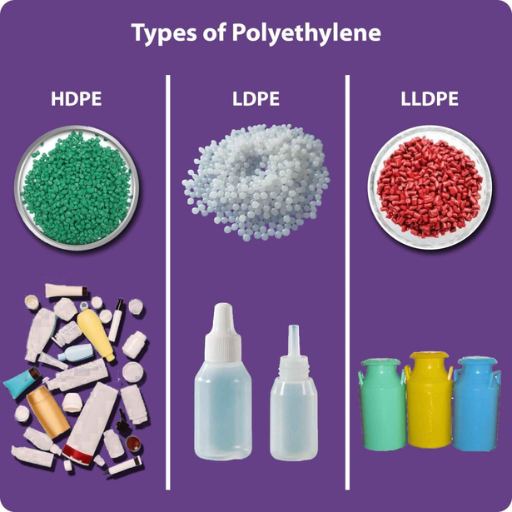

Drive through any farming belt in Punjab, Maharashtra or Rajasthan and you will see HDPE everywhere, even if most people don't call it by that name. The black pipe carrying water from a borewell, the sprinkler line in a wheat field, the plastic crates stacked at a mandi and the drums used to store inputs are very often made from HDPE.
For manufacturers who make these products, choosing the right HDPE grade directly affects how long the product lasts in the field. A farmer may not know what MFI or density means, but he will definitely notice when a pipe cracks after one summer.
This guide looks at the main agricultural uses of HDPE and what processors should keep in mind for each one.
---Why HDPE Works So Well on Farms
Agricultural products face a tough environment: strong sunlight, heat, rough handling, soil contact, fertilisers and pesticides. HDPE handles these conditions well because it offers:
- Good resistance to most agricultural chemicals and fertilisers
- High toughness and impact strength, even when handled roughly
- Low weight compared to metal, which makes transport and installation easier
- No rusting or corrosion
- Long service life when UV-stabilised properly
1. Irrigation and Water Supply Pipes
This is the single largest agricultural use of HDPE in India. HDPE pipes are used to carry water from borewells, canals and tanks to fields, as well as for rural drinking water lines.
For water supply pipes, manufacturers generally follow IS 4984, and use pipe-grade HDPE with a material classification such as PE 80 or PE 100. These grades have low MFI and are designed for long-term pressure performance.
What matters most:
- Low and consistent MFI for stable extrusion and good melt strength
- Correct carbon black dispersion or UV stabilisation for outdoor life
- Consistency between lots so wall thickness stays within limits
Using a cheaper blow moulding or injection grade for pressure pipes is one of the most costly mistakes a pipe maker can make. It may pass a quick visual check but fail hydrostatic testing or crack in the field.

2. Sprinkler Irrigation Systems
Portable sprinkler systems use HDPE pipes with quick-coupled joints. These pipes are moved around the field regularly, so they need good impact resistance and should not crack at the coupler. In India, IS 14151 covers sprinkler irrigation equipment.
Here again, pipe-grade HDPE with UV protection is the right choice, because these pipes spend most of their life lying in direct sunlight.
---3. Drip Irrigation Laterals
Drip irrigation lines are usually made with LLDPE or blends of LLDPE with other polyethylene, rather than pure HDPE, because they need more flexibility. However, the main and sub-main lines that feed a drip system are often HDPE.
If you are setting up a drip system manufacturing line, it is worth discussing both LLDPE and HDPE requirements together with your supplier.
---4. Crates for Fruits, Vegetables and Dairy
Plastic crates have replaced wooden boxes in many mandis and dairy supply chains. These crates are injection moulded, mostly from HDPE (and sometimes PP or PPCP).
| Crate Requirement | Material Property Needed |
|---|---|
| Survives drops and stacking | High impact strength |
| Thin walls, fast moulding | Medium to high MFI injection grade |
| Kept outdoors at mandis | UV stabilisation |
| Used for food produce | Food-contact suitable virgin grade |
5. Storage Drums, Cans and Mulch Film
Blow moulded HDPE drums and jerry cans are used to store pesticides, liquid fertilisers and diesel on farms. These products need a blow moulding grade with good environmental stress crack resistance (ESCR), because chemicals can attack weak walls over time.
Mulch film used to cover soil is mostly made from LLDPE or LDPE blends, though some film producers add HDPE for strength in thinner films.
---Virgin or Reprocessed for Agricultural Products?
This depends on the product. For pressure pipes and food-contact crates, virgin material is the safe and correct choice. For non-pressure products such as some conduit pipes, drainage lines, or non-food utility items, carefully selected reprocessed HDPE can reduce cost.
The key is to be honest about where performance is critical. A pipe that fails underground costs far more to replace than the money saved on raw material.
---How Granil PolyTrade Supports Agri-Product Manufacturers
Many of our customers make agricultural pipes, crates and containers. Demand in this sector is seasonal, with peaks before sowing seasons and during government irrigation scheme orders. We help manufacturers plan HDPE and LLDPE purchases around these peaks so material is available when production needs it.
If you are planning production for the coming season, you can share your requirement with us and we will suggest suitable grades based on your process.
---Frequently Asked Questions
Which HDPE grade is used for agricultural pipes?
Pipe-grade HDPE, usually classified as PE 80 or PE 100, with low MFI and UV protection. Water supply pipes in India are typically made to IS 4984.
Is HDPE safe for drinking water pipes?
Yes, when made from the correct virgin pipe grade and manufactured to the relevant standard.
Can reprocessed HDPE be used for irrigation pipes?
It is not recommended for pressure pipes. Reprocessed HDPE may be suitable for some non-pressure applications after proper testing.
Conclusion
HDPE has quietly become one of the most important materials in Indian agriculture. For manufacturers, success in this market comes down to using the right grade for each product, protecting it from sunlight and keeping material quality consistent from lot to lot.
For polymer sourcing support and industrial raw material requirements across India, visit: