EVA vs PVC Sole – Which is Better?
In the footwear industry, selecting the correct sole material is extremely important because it directly affects comfort, durability, flexibility, weight, and performance. Two of the most commonly used materials for shoe soles are EVA (Ethylene Vinyl Acetate) and PVC (Polyvinyl Chloride).
Both materials are widely used in slippers, sandals, sports shoes, industrial footwear, school shoes, safety shoes, and casual footwear products. Manufacturers select EVA or PVC depending on the target market, pricing, durability requirements, and comfort expectations.
At Granil PolyTrade , businesses can source high-quality EVA granules and PVC resin for footwear manufacturing and industrial applications across India.
What is EVA Material?
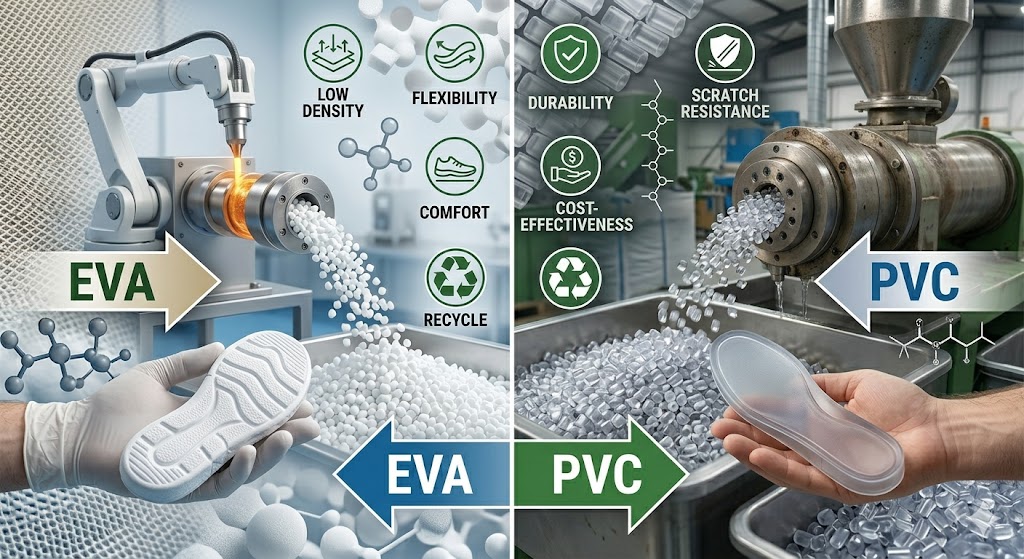
EVA stands for Ethylene Vinyl Acetate. It is a soft, lightweight, flexible polymer material widely used in footwear soles because of its cushioning and shock absorption properties.
EVA is commonly used in:
- Sports shoes
- Running shoes
- Slippers
- Flip-flops
- Sandals
- Foam footwear
- Kids footwear
Learn more about EVA material here: EVA Product Page
What is PVC Material?
PVC stands for Polyvinyl Chloride. It is a durable and economical plastic material widely used in footwear manufacturing because of its strength, water resistance, and cost-effectiveness.
PVC soles are commonly used in:
- School shoes
- Industrial footwear
- Safety shoes
- Rain footwear
- Budget footwear
- Hard sole sandals
Learn more about PVC raw material here: PVC Resin Product Page
Main Difference Between EVA and PVC Sole
| Feature | EVA Sole | PVC Sole |
|---|---|---|
| Weight | Very lightweight | Heavier than EVA |
| Comfort | Excellent cushioning | Moderate comfort |
| Flexibility | Highly flexible | Less flexible |
| Durability | Moderate durability | High durability |
| Water Resistance | Good | Excellent |
| Cost | Higher | Lower |
| Shock Absorption | Excellent | Average |
| Appearance | Soft and premium look | Glossy and rigid look |
| Industrial Usage | Sports & comfort footwear | Budget & industrial footwear |
Advantages of EVA Soles
- Extremely lightweight material
- Excellent comfort and cushioning
- Good flexibility for walking and running
- Shock absorption reduces foot pressure
- Ideal for sports and casual footwear
- Soft and premium feel
- Suitable for long-duration wear
Disadvantages of EVA Soles
- Less durable compared to PVC
- Can compress over time
- More expensive than PVC
- Lower abrasion resistance
- Not ideal for heavy industrial applications
Advantages of PVC Soles
- Highly durable material
- Cost-effective for mass manufacturing
- Excellent water resistance
- Strong grip and hardness
- Suitable for rough usage
- Longer life in industrial footwear
- Easy to manufacture in bulk quantities
Disadvantages of PVC Soles
- Heavier than EVA
- Less comfortable for long wear
- Lower flexibility
- Can become hard in cold weather
- Less cushioning compared to EVA
Which Sole is Better for Sports Shoes?
EVA soles are considered better for sports shoes because they are lightweight, flexible, and provide excellent shock absorption. Running shoes, gym shoes, and walking shoes usually use EVA-based foam soles for improved comfort.
Which Sole is Better for Industrial or School Shoes?
PVC soles are commonly preferred for industrial shoes, school shoes, and safety footwear because they offer better durability, hardness, and cost efficiency.
Why EVA is Widely Used in Modern Footwear
The global footwear industry increasingly prefers EVA because consumers now prioritize lightweight and comfortable footwear. EVA foam technology is widely used by sports shoe brands because it improves comfort and walking performance.
Read more footwear-related polymer blogs on: Granil PolyTrade Blogs
How EVA and PVC Soles are Manufactured
EVA Sole Manufacturing Process
- EVA granules are mixed with additives and blowing agents
- The material is heated and expanded
- Foam sheets or molded soles are created
- The sole is shaped and finished
PVC Sole Manufacturing Process
- PVC resin is mixed with plasticizers and additives
- The compound is heated in molding machines
- The sole shape is formed using injection molding
- The finished sole is cooled and trimmed
Industries Using EVA and PVC Materials
| Industry | Preferred Material |
|---|---|
| Sports Footwear | EVA |
| Casual Slippers | EVA |
| Industrial Safety Shoes | PVC |
| School Shoes | PVC |
| Premium Footwear | EVA |
| Rain Footwear | PVC |
Polymer Suppliers for EVA and PVC Materials
Footwear manufacturers require reliable suppliers for EVA granules and PVC resin to maintain product quality and manufacturing consistency.
Granil PolyTrade supplies polymer raw materials for footwear manufacturers, plastic processors, and industrial buyers across India.
Conclusion
Both EVA and PVC soles have their own advantages depending on the application. EVA is ideal for lightweight, comfortable, and flexible footwear, while PVC is better for durability, affordability, and industrial usage.
For sports shoes and premium comfort footwear, EVA is usually considered better. For budget footwear, industrial shoes, and water-resistant applications, PVC remains a strong choice.
Choosing the correct material depends on comfort needs, target pricing, durability expectations, and manufacturing requirements.