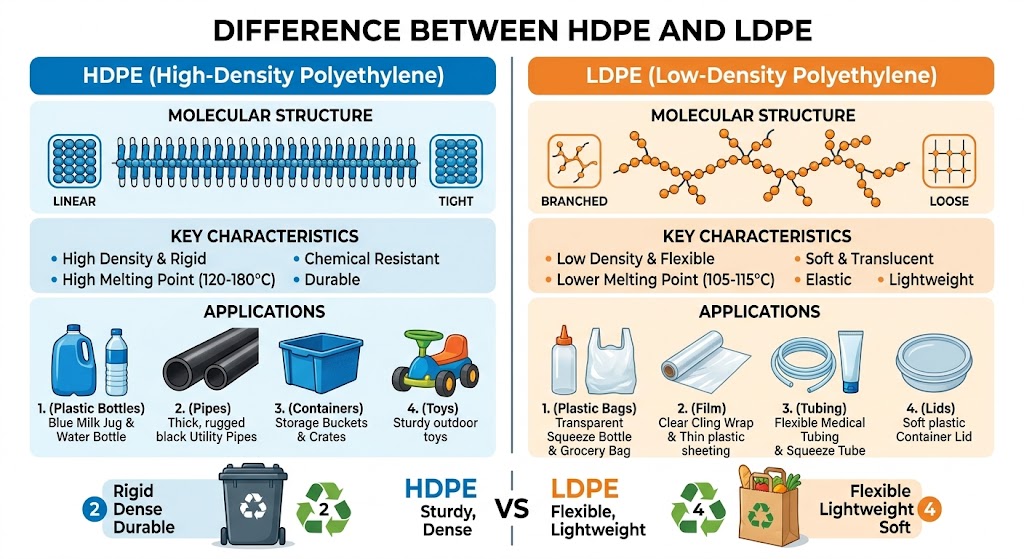
Difference Between HDPE And LDPE
HDPE (High-Density Polyethylene) and LDPE (Low-Density Polyethylene) are among the most commonly used polyethylene materials in the plastic and polymer industry. Both are thermoplastic polymers derived from petroleum, but they differ significantly in density, flexibility, strength, processing behavior, and industrial applications.
Understanding the difference between HDPE and LDPE is important for manufacturers, packaging industries, pipe manufacturers, plastic converters, and industrial buyers who need the right raw material for their applications.
What Is HDPE?
HDPE stands for High-Density Polyethylene. It is a strong, rigid, and durable thermoplastic polymer widely used in industrial and commercial applications. HDPE has a linear molecular structure with minimal branching, which gives it higher density and strength.
HDPE is commonly used in pipes, bottles, drums, industrial containers, geomembranes, and blow molding applications because of its excellent chemical resistance and durability.
What Is LDPE?
LDPE stands for Low-Density Polyethylene. It is a softer and more flexible polyethylene material with a branched molecular structure. Due to its lower density, LDPE offers better flexibility and transparency compared to HDPE.
LDPE is widely used in plastic bags, shrink films, flexible packaging, squeeze bottles, liners, and lightweight industrial applications.
Difference Between HDPE And LDPE
| Property | HDPE | LDPE |
|---|---|---|
| Full Form | High-Density Polyethylene | Low-Density Polyethylene |
| Density | Higher Density | Lower Density |
| Flexibility | Rigid and Strong | Soft and Flexible |
| Transparency | Less Transparent | More Transparent |
| Chemical Resistance | Excellent | Good |
| Impact Strength | High | Moderate |
| Common Applications | Pipes, Bottles, Containers | Films, Bags, Flexible Packaging |
| Melting Point | Higher | Lower |
Applications Of HDPE
- Water pipes and industrial pipes
- Plastic bottles and containers
- Chemical storage drums
- Industrial packaging
- Geomembranes
- Blow molding products
Applications Of LDPE
- Plastic carry bags
- Shrink films and wrapping films
- Flexible packaging materials
- Squeeze bottles
- Food packaging
- Agricultural films
Advantages Of HDPE
- High strength and durability
- Excellent chemical resistance
- Long service life
- Suitable for rigid applications
- Good moisture resistance
Advantages Of LDPE
- Excellent flexibility
- Lightweight material
- Easy processability
- Good transparency
- Suitable for flexible films and packaging
Which Is Better: HDPE Or LDPE?
The choice between HDPE and LDPE depends on the application requirement. HDPE is preferred where strength, rigidity, and durability are important, while LDPE is selected for flexibility, softness, and lightweight packaging applications.
Industrial buyers and manufacturers often compare HDPE vs LDPE based on processing method, cost, flexibility, impact strength, and end-use performance.
Conclusion
Both HDPE and LDPE are important polyethylene materials widely used across industrial and commercial sectors. HDPE is ideal for rigid and durable products, while LDPE performs better in flexible packaging and film applications. Choosing the right polymer depends on the specific industrial application, processing requirements, and commercial goals.
Granil PolyTrade supplies commodity polymers including HDPE, LDPE, PP, LLDPE, PVC Resin, EVA, PET, and engineering polymers across India.
With rising demand for quality recycled plastic raw materials, trusted suppliers and traders like Granil PolyTrade help manufacturers source reliable polymer solutions across India.
For polymer sourcing, recycled plastic materials, and industrial raw material support, visit: