Difference Between PVC and EVA
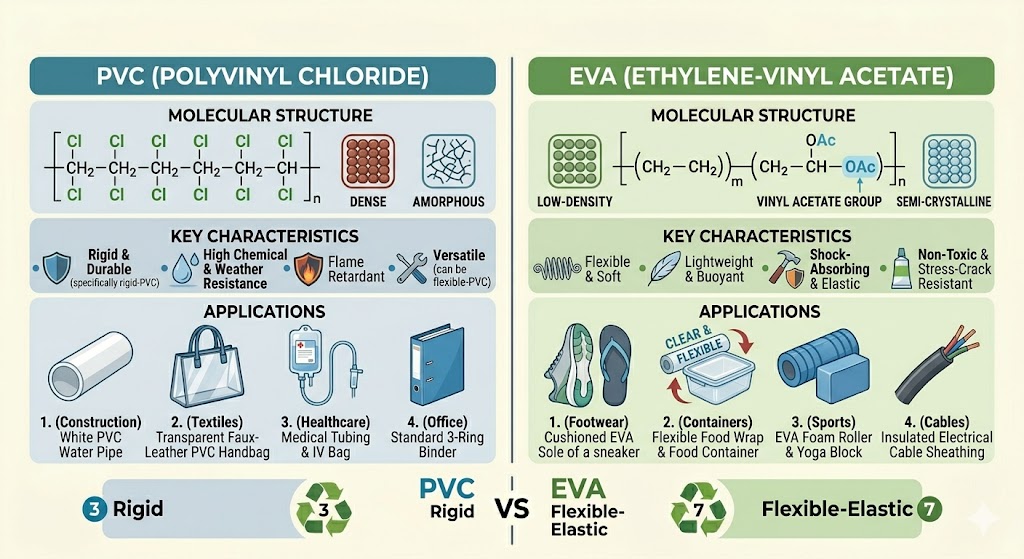
PVC (Polyvinyl Chloride) and EVA (Ethylene Vinyl Acetate) are two commonly used polymer materials widely used in industrial manufacturing, footwear, packaging, construction, insulation, and flexible commercial applications. Both materials offer different mechanical and commercial advantages depending on the intended use.
Understanding the difference between PVC and EVA helps manufacturers, converters, traders, and industrial buyers choose the correct material based on flexibility, durability, softness, cost, and processing requirements.
What Is PVC?
PVC (Polyvinyl Chloride) is a durable and versatile thermoplastic polymer widely used in pipes, fittings, cable insulation, industrial sheets, construction products, and packaging applications. PVC can be manufactured in both rigid and flexible forms depending on additives and plasticizers.
PVC is commonly used in:
- Pipes and fittings
- Cable insulation
- Industrial sheets
- Construction materials
- Packaging films
- Flooring products
What Is EVA?
EVA (Ethylene Vinyl Acetate) is a soft and flexible copolymer known for cushioning, impact resistance, and lightweight performance. EVA is widely used in footwear soles, foam sheets, sports products, adhesives, and flexible packaging applications.
EVA is commonly used in:
- Footwear soles
- Foam sheets
- Sports equipment
- Hot melt adhesives
- Flexible films
- Cushioning products
Main Difference Between PVC and EVA
1. Flexibility
EVA is naturally softer and more flexible than PVC. EVA is preferred where cushioning and comfort are important, especially in footwear and foam applications.
PVC can also be flexible, but it generally requires plasticizers and additives to achieve softness.
2. Weight
EVA is lighter compared to PVC, making it highly suitable for lightweight products like sports shoes and foam products.
PVC is comparatively heavier and denser.
3. Durability
PVC offers strong durability, chemical resistance, and long service life, especially in construction and industrial applications.
EVA provides good flexibility and impact resistance but is mainly selected for comfort-oriented applications.
4. Chemical Resistance
PVC has better chemical resistance and weather resistance compared to EVA in many industrial environments.
5. Processing and Applications
EVA is commonly processed into foam and cushioning products, while PVC is widely used in extrusion, pipe manufacturing, cable insulation, and rigid industrial products.
6. Environmental Considerations
EVA is often preferred in some applications because it does not contain chlorine. PVC manufacturing and disposal may require additional environmental handling depending on the application and additives used.
PVC vs EVA Applications
| Application | PVC | EVA |
|---|---|---|
| Pipes and Fittings | Excellent | Limited |
| Footwear | Good | Excellent |
| Cushioning | Moderate | Excellent |
| Cable Insulation | Excellent | Limited |
| Flexible Films | Good | Good |
| Industrial Durability | High | Moderate |
Which Material Is Better?
The choice between PVC and EVA depends on the application requirement. PVC is preferred where durability, rigidity, chemical resistance, and long-term industrial use are important. EVA is selected where softness, flexibility, lightweight structure, and comfort are required.
Industrial buyers compare EVA and PVC based on commercial cost, product durability, processing method, flexibility, and final product application.
Conclusion
PVC and EVA are both important polymer materials used across construction, footwear, packaging, insulation, and industrial manufacturing sectors. PVC is known for strong industrial durability and chemical resistance, while EVA is widely preferred for flexible and cushioning applications.
At Granil PolyTrade, we supply PVC resin, EVA polymer, HDPE, LLDPE, PP, LDPE, engineering polymers, and reprocessed polymer materials for industrial and commercial requirements across India.
With rising demand for quality recycled plastic raw materials, trusted suppliers and traders like Granil PolyTrade help manufacturers source reliable polymer solutions across India.
For polymer sourcing, recycled plastic materials, and industrial raw material support, visit: