Difference Between HDPE and PP
HDPE (High-Density Polyethylene) and PP (Polypropylene) are two of the most commonly used commodity polymers in the plastic manufacturing and packaging industry. Both materials are widely used across industrial, commercial, packaging, automotive, and infrastructure applications.
Although HDPE and PP may appear similar in some applications, they differ in strength, flexibility, heat resistance, weight, and commercial usability. Understanding the difference between HDPE and PP helps manufacturers, converters, traders, and industrial buyers select the right material according to product performance and processing requirements.
What Is HDPE?
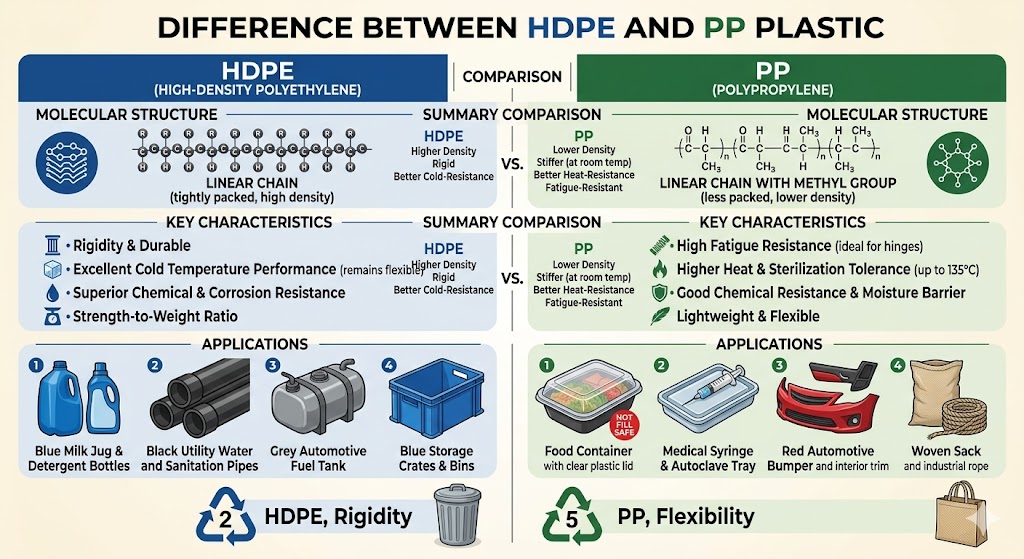
HDPE (High-Density Polyethylene) is a strong and durable thermoplastic polymer widely used in pipes, bottles, industrial containers, drums, sheets, and rigid applications. HDPE is known for its toughness, chemical resistance, moisture resistance, and long service life.
HDPE is commonly used in:
- Pipes and fittings
- Water tanks
- Industrial drums
- Blow molded containers
- Geomembranes
- Plastic bottles
What Is PP?
PP (Polypropylene) is a lightweight and versatile thermoplastic polymer known for heat resistance, stiffness, and easy processability. PP is widely used in packaging, automotive parts, woven sacks, molded products, food containers, and household items.
PP is commonly used in:
- Food containers
- Automotive components
- Packaging products
- Injection molded parts
- Woven bags
- Industrial molded items
Main Difference Between HDPE and PP
1. Strength and Rigidity
HDPE is known for high strength and excellent impact resistance, especially in rigid applications like pipes and industrial containers.
PP is comparatively stiffer and lighter, making it suitable for molded commercial products and lightweight applications.
2. Heat Resistance
PP generally offers better heat resistance compared to HDPE. PP is commonly used in hot-fill and microwave-safe applications.
3. Flexibility
HDPE offers better flexibility and toughness in many industrial applications, especially where impact resistance matters.
PP is stiffer and more rigid in comparison.
4. Weight
PP has lower density compared to HDPE, making it lighter and commercially attractive for lightweight packaging and molded products.
5. Chemical Resistance
Both HDPE and PP provide strong chemical resistance. However, HDPE is often preferred in industrial storage and pipe applications because of its durability under harsh conditions.
6. Moisture Resistance
HDPE offers excellent moisture resistance and performs well in outdoor and water-handling applications.
HDPE vs PP Applications
| Application | HDPE | PP |
|---|---|---|
| Pipes and Tanks | Excellent | Limited |
| Food Containers | Good | Excellent |
| Heat Resistance | Moderate | High |
| Industrial Containers | Excellent | Good |
| Lightweight Packaging | Good | Excellent |
| Impact Resistance | High | Moderate |
Which Polymer Is Better?
The choice between HDPE and PP depends on the final application and industrial requirement. HDPE is preferred where strength, impact resistance, and durability are important. PP is selected where heat resistance, lightweight performance, and stiffness matter more.
Manufacturers compare HDPE and PP based on processing method, commercial cost, mechanical performance, and product application before selecting the right polymer.
Conclusion
HDPE and PP are highly important polymers used across packaging, infrastructure, industrial manufacturing, automotive, and molded applications. HDPE is known for strong durability and impact resistance, while PP is valued for heat resistance and lightweight commercial performance.
At Granil PolyTrade, we supply HDPE, PP granules, LLDPE, LDPE, PVC resin, PET resin, engineering polymers, and reprocessed polymer materials for industrial and commercial requirements across India.
With rising demand for quality recycled plastic raw materials, trusted suppliers and traders like Granil PolyTrade help manufacturers source reliable polymer solutions across India.
For polymer sourcing, recycled plastic materials, and industrial raw material support, visit: